
Which is better - FireWire or USB?
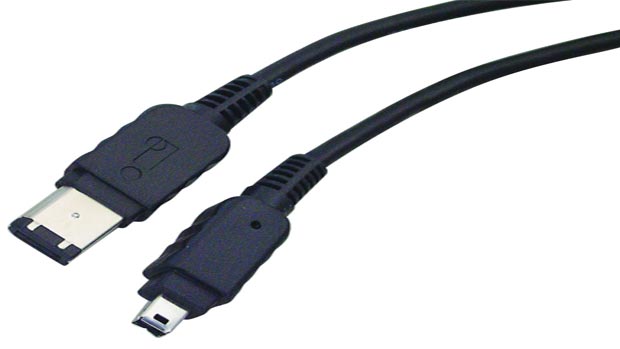
There are two areas where your choice of audio interface will be critical to the success of your recording. Firstly, does the interface work properly and reliably? Secondly, does it support the number of tracks you intend to use?
Your choice of interface will also involve choosing among the USB 1.1, USB 2.0 and FireWire buses. So which is most significant for professional use?
USB comes in two varieties - USB 1.1 and USB 2.0. USB 1.1 is a comparatively slow bus, running at 12 megabits/second. In theory this should be enough to support around sixteen channels of CD-quality audio, but in practice the number of channels that can work reliably is fewer. USB 1.1 is perfectly good for stereo though, as demonstrated by the Digidesign Mbox 2 USB Audio Interface.
USB 2.0 is very much faster than USB 1.1 - 480 megabits/second in fact. Theory suggests that this would be good for hundreds of channels, but interface designers have found USB 2.0 difficult to implement, compared to the alternatives. This might be surprising seeing as probably every computer sold today has USB 2.0 connectivity as standard. But we have to remember that audio is a special kind of data that needs to flow in real time, rather than any other kind of computer data that can flow in stops and starts.
FireWire on the other hand was specifically designed for signals - probably video rather than audio, but any bus that can handle the high data rate of video reliably shouldn't have any trouble with audio.
FireWire comes in 400 and 800 varieties. FireWire 800 runs at 800 megabits/second, as you might guess. In practice, you could conceivably run as many as eighty inputs and outputs at CD-quality. Some would say that if you need more channels than this, you're doing something wrong!
At this point in time, FireWire is the bus of choice for audio. USB 2.0 has the capability but that capability is only just starting to be fully harnessed for audio, where FireWire is well established.
USB 1.1 is surprisingly popular still, and of course will plug into a USB 2.0 socket on your computer just fine. The reason for this popularity is that manufacturers can buy audio chips for USB 1.1 off the shelf at low prices, where USB 2.0 requires design from first principles. In FireWire, this development work has already been done.
One point to look out for with USB 1.1 interfaces is that many are made specifically for the 'hobbyist' market, rather than the professional market. Buy a cheap interface and you'll know what to expect.
Surprisingly, there is an interface that is faster than any of the above bus systems - PCI.
In a PCI-based interface, digital audio is sent to a card inside the computer that communicates directly with the PCI bus, and therefore to the processor. The bandwidth of PCI is over 1000 megabits/second, which makes it the fastest interface of all.
That will be why the top-end Pro Tools HD system is PCI rather than FireWire or USB.

David Mellor
David Mellor is CEO and Course Director of Audio Masterclass. David has designed courses in audio education and training since 1986 and is the publisher and principal writer of Adventures In Audio.


