
What's the difference? Recording, Mixing, Mastering
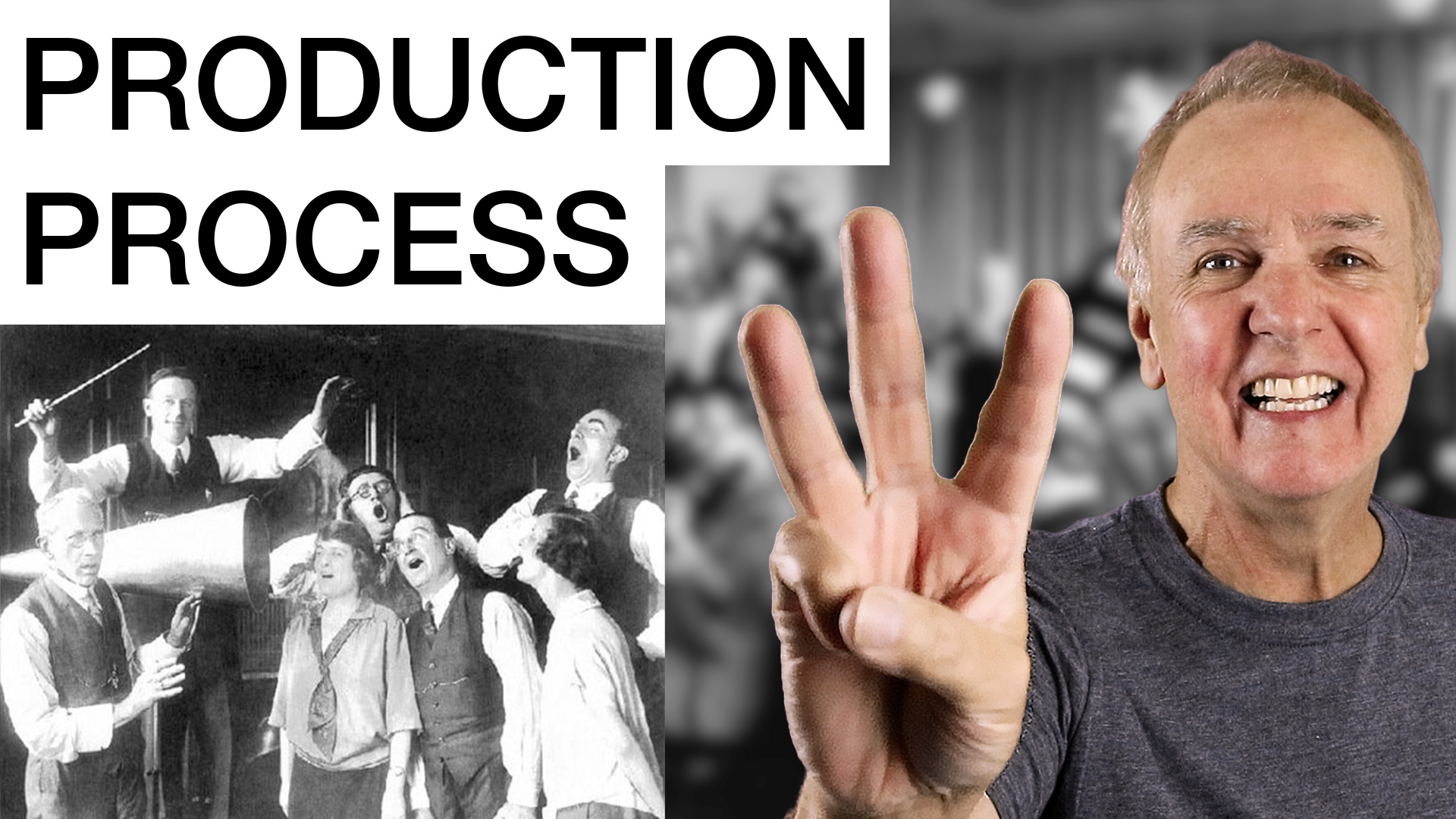
Recording, mixing, mastering. Three separate stages of the production process. It seems simple and perhaps obvious. But when you start thinking more deeply, there are some lines between the three stages that are a little bit blurry.
Automated transcript
What is the difference between recording mixing and mastering learn audio online with audio masterclass audiomasterclass.com this is a question asked to me by an audio master class website visitor recording mixing mastering three separate stages of the production process it seems simple and perhaps obvious but when you start thinking more deeply there are some lines between the three stages that are a little bit blurry let's go back to the olden days of recording when musicians would gather around the horn of an acoustic phonograph no microphones involved and no electricity either the process of recording here takes the sound waves from the instruments collects them into the horn and carves a wavy line in a wax disc or in even earlier times a cylinder here there's a simultaneous process of mixing where quiet instruments will be placed closer to the horn louder instruments further away if there was a soloist then they'd be placed where they would stand out in the finished recording against the accompanying instruments i think it would be fair to say that there would not be any specific mastering process following recording the next step would be directly to manufacturing and duplication flash forward to the late 1940s and early 1950s when it became possible to make high quality recordings on magnetic tape a band or orchestra could now sit in their preferred layout and multiple microphones could be positioned to capture their sound these microphones could be mixed to give a pleasing blend to mono then later on to stereo here again therefore the processes of recording and mixing take place simultaneously but let's flush further forward to 1966 or 1967 depending on which history you read when ampex created the world's first 16 track recorder this made it possible to record each instrument and vocal to its own track we call this multi-track recording recording and mixing can now become separate stages of the process first get a good recording then when the musicians have gone home take as long as you like to create the very best mix that you can by the way the ampex mm-1000 pictured is featured in epicenter brian's youtube channel where there's a great video on what it takes to keep a machine like this maintained i'll put a link in the description below so that accounts for recording and mixing what about mastering this is where things can become confusing let's consider the recording studio of the 1970s a band would make a multi-track recording the engineer advised by the producer would mix it into stereo the finished stereo recording would often be referred to as the master tape the meaning of this is that this one tape is the very best version of the finished recording that exists and will ever exist from it will be made a safety copy which due to the cold hard facts of analog recording will be degraded compared to the master and a production master from which vinyl records will be made but then comes the process of vinyl mastering the vinyl mastering engineer would further process the recording so that it would sound at its best on a record a vinyl cutting master tape would be made so this process only had to be done once let's hop to the present day when recording let's say a band into digital audio workstation software the aim is to capture each instrument and vocal to the highest level of quality possible with a certain amount of creativity according to the needs of the production when recording is complete the multi-track session will be mixed to stereo mixing is the creative and time-consuming process of making decisions on how the instruments and vocals will be blended when that decision making process is complete the result will be bounced as we say to a stereo file in the 1970s we would have called this the master version but because in digital audio infinite numbers of identical copies can be made this one stereo file doesn't have that level of status so we can just call it the mix in theory the mix could be ready for commercial release as it is but just as in the old days vinyl mastering engineers could apply an extra layer of gloss to a recording as well as making it technically fit for vinyl the modern mastery engineer will take a stereo mix and improve it still further without reference to the original multi-track recording so there we have it in summary recording is the process of capturing the original sounds into the digital audio workstation mixing is blending the multi-track recording into stereo mastering is improving the stereo mix for commercial release i'm david meller course director of audio masterclass thank you for listening
Comments on this video
You can comment on this video at YouTube
You can comment on this video at YouTube

David Mellor
David Mellor is CEO and Course Director of Audio Masterclass. David has designed courses in audio education and training since 1986 and is the publisher and principal writer of Adventures In Audio.


@archive3824: Thank you! I wonder: does the function of mastering engineer of adequating a master mix to the different necessities of different media for release such as vynil as opposed to tape not still be a reality today, in a scenery which does impose different limitations depending on digital release platforms? I have heard that the limitations on YouTube are different from, say, Spotify. I imagine there must be other platforms with their own defined limits for uploaded media which would require a mastering engineer to adquate the final mix for distribution.
@AudioMasterclass replies to @archive3824: It is best to be able to hear the version that your listeners will hear, then make any changes to the original WAV master that are necessary. So for instance you could process your WAV according to Spotify's standards (https://artists.spotify.com/faq/mastering-and-loudness#how-does-spotify-process-my-audio-files) then listen, and modify the WAV if necessary then process and listen again.
@correametal: Excellent!!!
@AudioMasterclass replies to @correametal: Thank you.
@studiomedia-arttomaszzbore1251: Very informative, concise and refreshing . Thanks !
@AudioMasterclass replies to @studiomedia-arttomaszzbore1251: You're welcome.
@TheRedPiLLvs: Must See Video