
What is production? Part 2: Arrangement
Part 1 of this series, on A&R, is available here...
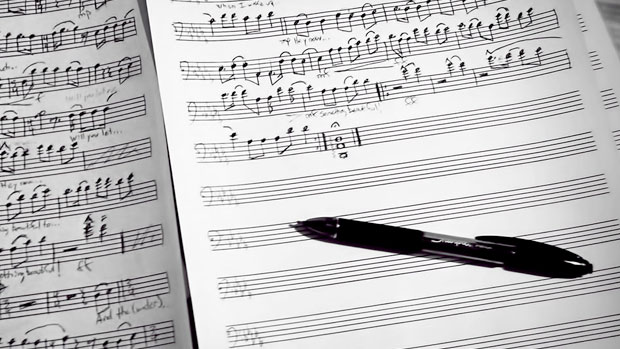
It is useful to consider musical arrangement outside of the context of recording. In days gone by, an arranger would work with pen and paper (yes, pen not pencil - since it is easier to write quickly and special nibs for music are available), and produce scores and instrumental parts for a band to play. When I say 'band', I'm thinking of something like Duke Ellington, Count Basie or Glenn Miller rather than guitars, bass and drums. The style of arrangement was an important part of a band's sound and the scores and parts were guarded carefully lest anyone should try and steal the secrets of how their special sound was achieved. (As an aside, there are now people who specialize in reconstructing music of the past where the scores and parts of band and film music have been lost over time. One such is John Wilson who described in an interview that "transcribing music from the soundtrack is an incredibly laborious process and sometimes it's very, very slow going. The cyclone sequence from The Wizard Of Oz took forever. I remember spending a whole Sunday doing three or four seconds worth of music, so complex is that scene, with notes flying all over the page.")
In modern music where a band will typically consist of guitars, keyboards, bass and drums, then there is no one person who is the arranger. Instead each player will arrange his or her own part. Sometimes one person will take charge and give the players direction. Other times there will be a group discussion of what each person should play. The process seems informal, but for the band to sound good, then the arrangement needs to be good. Every note needs to count.
There are, in general, five components to a musical arrangement...
- A percussive rhythm provided by a drum kit, possibly supplemented by instruments such as the tambourine, maracas etc.
- A bass line
- A melody line, often sung
- Harmonies, either static or moving, or a combination of both
- Fills
I don't think I need explain further what the drums, bass or melody do in the arrangement, but the other items are interesting.
Harmonies
Harmonies fill in the gap between the melody line and the bass line. Typically the melody can be around two octaves above the bass line provided by a bass guitar, so that leaves a space that needs to be filled in. Harmony notes are found that complement the notes of the melody and bass line, according to the rules and guidelines of music theory. But there are two ways this can be done…
The simplest way is to use a 'pad'. A musical pad is a sequence of sustained chords, each of which lasts the full duration for which it is required without any change or repetition of notes. So it could be a keyboard player playing chords that each last a whole bar, using a sustaining sound such as strings or organ. It could be a real string section if your budget allows. It is easy to use a pad, so it is commonly done. Sometimes a pad is all that is required if the melody, bass and drums are providing sufficient interest themselves.
The other method is to add rhythm and/or movement to the harmonies. This can be done by a guitarist strumming, or the keyboard player breaking up the notes of the chords and giving them a rhythm. Moving harmonies are usually more interesting than a simple pad, although both can be used if a thick texture is required.
Fills
Music generally comes in phrases. A tune will start, say what it has to say, then come to a close. There will be a lull, then another tune or a repetition of the first one. In a song, one line will normally come to an end so that the singer can take a breath before the next one starts. For the first verse of a song this is fine since everything is a new experience for the listener. But on subsequent verses the gaps start to yawn.
It has become something of a stylistic cliche that gaps in the melodic line will be plugged by fills. You can have a drum fill, an instrumental lick, a response from the background vocals, or even a studio trick like an echo. There are many options and it is a rare song that doesn't feature fills.
Arranging in the studio
Before the 1960s, arrangements were created either on old-fashioned pen and paper, or in the rehearsal room. Whatever the style of music, the band would enter the studio ready to play. But then The Beatles took to block-booking EMI's studio in Abbey Road and creating their arrangements as they recorded. This style of working has now pretty much become the norm. A band will enter the studio with a half-formed idea and develop it, develop it, and develop it more until it sounds good. Many musical ideas will be tried out. Many will be deleted. Those that remain hopefully represent the best possible arrangement of the song. And this arrangement will almost certainly contain the five elements I outlined earlier.
What makes a good arrangement?
This is an interesting question. A good arrangement will have the five key elements listed earlier, of course. It will have lots of other wonderful features. But the one thing I find that is absolutely key to a great arrangement is simplicity. A really good arrangement seems to have the minimum number of notes required to support the song, and the minimum degree of complexity. Indeed, if you listen to the original multitracks or stems of chart hits, it is often amazing how simple the arrangements are. Simple yes, but crafted to perfection.
In summary, arrangement is a vitally important part of the production process. If not done well, then no amount of plug-ins, mixing or mastering skills can substitute. Time spent thinking about the musical arrangement of a song and experimenting with ideas will be time very well spent.

David Mellor
David Mellor is CEO and Course Director of Audio Masterclass. David has designed courses in audio education and training since 1986 and is the publisher and principal writer of Adventures In Audio.


