
The technology of the omnidirectional microphone
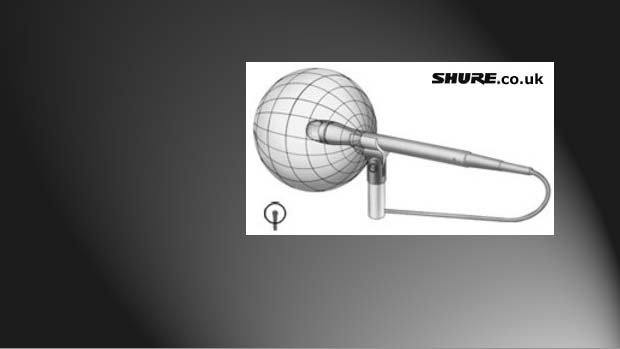
Looking at directional characteristics from an academic standpoint, the
omnidirectional microphone is sensitive to the pressure of the sound wave.
The diaphragm is completely enclosed, apart from a tiny slow-acting air-pressure
equalizing vent, and the mic effectively compares the changing pressure of the
outside air under the influence of the sound signal with the constant pressure
within.
Pressure acts equally in all directions, therefore the mic is equally sensitive
in all directions, in theory as we said.
In practice, at higher frequencies where the size of the mic starts to become
significant in comparison with the wavelength, the diaphragm will be shielded
from sound approaching from the rear and rearward HF response will drop.
So in fact, although a microphone may be described as omnidirectional, it
will only be truly omnidirectional up to around 5 kHz, above which its directivity
will become more focused.
Some microphones have a special attachment that can help randomize the directivity
of incoming sound.

David Mellor
David Mellor is CEO and Course Director of Audio Masterclass. David has designed courses in audio education and training since 1986 and is the publisher and principal writer of Adventures In Audio.


