
PA systems and the acoustics of rooms
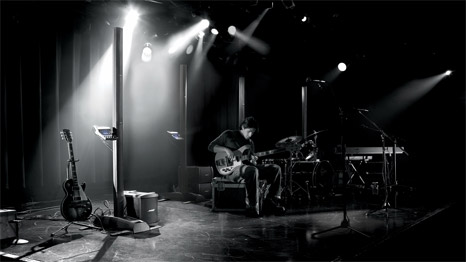
When you are setting up a PA system, whether for speech or music, it is important to take into account the acoustics of the room.
The sound engineer's fondest wish of course is that the room didn't have any acoustics! A concert hall depends on reflections from hard, preferably irregular, surfaces for a full, rich sound, but put a PA system in that hall and the reverberation of sound coming from the PA suddenly makes everything sound pretty bad.
The favorite option therefore is to dampen down the room if possible. Drapes can be used to soften up hard reflecting surfaces - they can be hired if needed. But usually the engineer has to take the room as it is - fitting drapes, although a good step to take, is rare.
The more reverberant a room is, the more essential it is to direct the sound from the PA loudspeakers at the audience and not at the walls and ceilings. This accomplishes two things - firstly the amount of reflected sound is less, secondly, the audience is soft and absorbent, so there is less sound to reflect.
Also, in extremely reverberant rooms, and particularly for speech, consider using multiple loudspeakers so that members of the audience are never more than three or four meters from a speaker. This will increase the ratio of direct to reflected sound.
The next consideration is the 'frequency response' of the room. The reverberation in the room will favor some frequencies above others. So although your PA system may have a flat response, the overall response of the direct plus reflected sound may be anything but flat. A graphic equalizer is the tool that is used to 'equalize the room' for the best compromise.
Related to this is feedback. As the gain in the system is raised, at some point the characteristic oscillation of howlround will be heard. This always occurs at the frequency where the overall system plus room frequency response is at its peak. Once again, a graphic equalizer can be used to improve matters. The process of finding and eliminating feedback hotspots is sometimes known as 'ringing out the room'.
Further than that, usually you just have to accept the room as it is. Use loudspeakers with known directional properties if possible, such as constant directivity horns or column arrays. Make sure the audience is well covered, with speakers high enough to fire over their heads to reach the back, preferably angled downwards towards the audience. Keep a safe margin between your maximum operating level and the level at which you know, through experiment, that feedback will occur.

David Mellor
David Mellor is CEO and Course Director of Audio Masterclass. David has designed courses in audio education and training since 1986 and is the publisher and principal writer of Adventures In Audio.


