
Akai MPC 3000 MIDI Production Centre (part 2)
In the beginning
This latest incarnation of the hardware sequencer has some prestigious forbears.
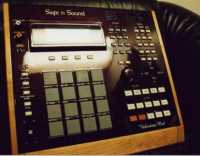
The front panel of the Akai MPC 3000 bears the signature of Roger Linn who was
the original proponent of the drum machine over a decade ago. Japanese manufacturers
often seem to be more interested in functionality rather than usability, which
is great for those who find the process of learning powerful but difficult systems
pleasurable in some strange way.
Akai obviously realised that Roger Linn could bring the very valuable feature
of ease of use to their equipment and so they put him on the payroll. This was
a very sensible thing to do, and the partnership has borne fruit of a very high
quality. The forerunner to the MPC 3000 was the MPC 60 drum sampler/rhythm programmer
which was a powerful piece of equipment that I never felt achieved the reputation
it deserved in this country. There was also the ASQ 10 which contained the sequencing
part of the MPC 60 without the drum sampling facilities, otherwise the software
was identical.
I owned an ASQ 10 myself for a time, and now I kick myself that I let it go.
At the time I was seduced by computer sequencing and I didn’t have the foresight
to realise that I could have run both types of MIDI sequencer side by side and
had the best of both worlds. The Akai units are particularly good for drum programming,
as you might expect, and computer sequencers find it hard to keep up. I found
only two drawbacks to the ASQ 10 (after the software had reached a mature version),
one of which was that it frequently had to take time out at length to 'analyse
the sequence’.
The MPC 3000 uses a faster processor so this isn’t a problem. I’ll mention
the other drawback later since it is retained in the MPC 3000, but I will say
that I now find it less of a problem and more a part of the character of the
machine.

David Mellor
David Mellor is CEO and Course Director of Audio Masterclass. David has designed courses in audio education and training since 1986 and is the publisher and principal writer of Adventures In Audio.


