
A brief introduction to microphones for the home recording studio

Large-diaphragm capacitor microphones
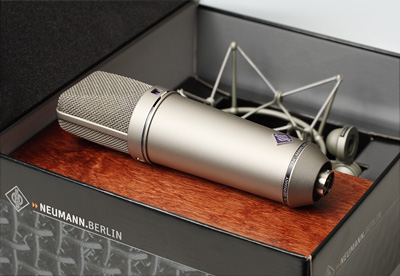
This is the microphone that you will use unless you have a specific reason to use something else. 'Capacitor' means that it works on the principle of electrostatics. 'Large-diaphragm' means, obviously, that it has a large diameter diaphragm rather than a small one. Large-diaphragm mics tend to have a flattering sound and make anything you record slightly more impressive than it is in real life. Classic large-diaphragm capacitor mics are the AKG C414 and Neumann U87, which have both been available for over thirty years in various forms. These are expensive microphones, but much less costly large-diaphragm mics are available that are capable of excellent results.
Dynamic microphone
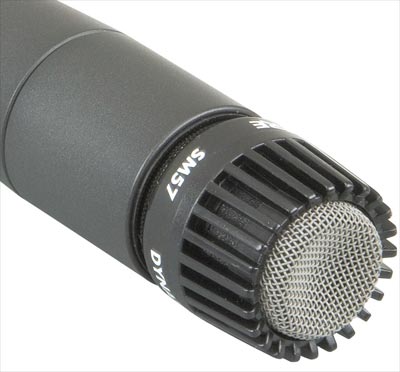
The dynamic microphone works on the same principle as an electrical generator, or dynamo. Where capacitor mics tend to capture a bright and detailed sound, the dynamic captures a sound that is less bright, less detailed, but with a satisfying sense of fullness, particularly on guitar cabinets and drums. The classic dynamic microphone is without doubt the Shure SM57, which can be found in almost every professional studio, often in sufficient quantity to mic up each drum of even a large drum set individually. Fortunately, the SM57 is not an expensive microphone and, in this respect, full professional quality is practical for any home recording studio owner to aspire to. The Shure SM58 is basically the same design, but with a large mesh grille. It is often used for vocals in live sound.
Vacuum-tube microphone
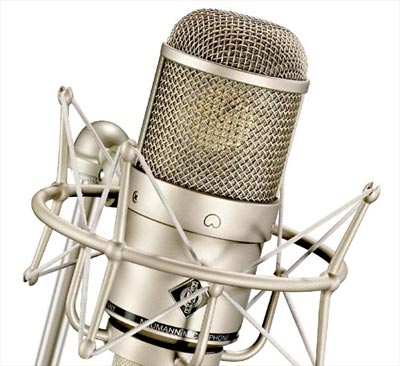
To give this its full title, it is the large-diaphragm, vacuum-tube capacitor microphone, although it is generally known as a 'tube mic' for short. The difference between this and the normal large-diaphragm capacitor microphone is that where the normal capacitor mic has an internal transistor amplifier, the tube mic has an internal vacuum-tube amplifier. This produces a lovely sheen on the sound that is particularly appropriate for vocals. There are a number of excellent vacuum-tube microphones available. One such is the Neumann M147. It is expensive, but less costly vacuum-tube microphones are also available.
Small-diaphragm capacitor microphone
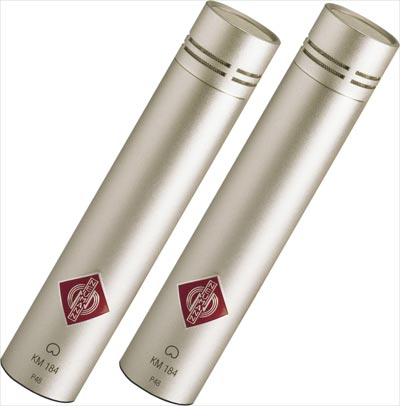
These mics are sometimes known as 'pencil mics' because of their slim cylindrical shape, although they are never quite as thin as a normal pencil. This is the most accurate microphone design and would be used if you wanted to capture an instrument exactly as it sounds in real life, without any flattery. A classic example of the small-diaphragm capacitor microphone is the Neumann K184, although once again less expensive models are available.
Detailed information on microphone techniques is available in Audio Masterclass courses.

David Mellor
David Mellor is CEO and Course Director of Audio Masterclass. David has designed courses in audio education and training since 1986 and is the publisher and principal writer of Adventures In Audio.


