
A brief introduction to microphone techniques for the home recording studio
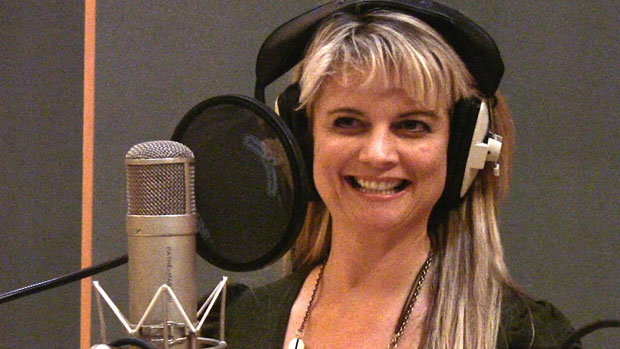
In a professional studio, where there the control room and recording area are separated, the engineer will position the microphone approximately according to his or her experience. He or she will then listen to the instrument from the control room while an assistant moves the microphone according to the engineer's instructions. In this way, the engineer can capture the absolute best sound from the instrument. Clearly this isn't possible if you are working alone, but if you listen on headphones (preferably the closed type, which have better sound insulation) as you move the microphone, it will be possible to find the best position.
Miking a single instrument
 As a rule, the starting point for microphone positioning is the position you would normally listen to an instrument from. The microphone will usually have to be placed closer than that however, so as not to pick up too much reverberation from the room. Having said that, if you want to be creative there is no reason you shouldn't place the mic anywhere you like, as long as it captures a sound that pleases you.
Miking a vocal
Although it is common practice to experiment with different microphones, to see which suits the singer you are working with best, positioning is straightforward. The most common technique is to place the microphone directly in front of the singer's mouth, with a pop-screen in between to protect the mic against blasts of air which would produce audible pops in the recording. The sound texture will change according to the distance of the mic from the singer's mouth. The engineer would consider this, with regard to the style of the music, when positioning the mic. As always, the best results are obtained by experiment.
Stereo microphone techniques
A stereo recording can be made with two microphones. They can be positioned close together (the coincident crossed pair technique has them as close as physically possible) and pointed left and right. Or they can be spaced apart for a recording that has more of a sense of actually being there in the room. It is worth noting that the spaced technique is harder to control and may result in a wandering stereo image, or a recording that doesn't work well if played in mono, as on a TV set, portable radio or center-cluster PA system.
It is perfectly possible to record an orchestra, choir or any acoustic ensemble of any size with just two microphones set up as a stereo pair. It takes time however to find exactly the best position for them, so usually a stereo pair is used in conjunction with individual mics (for a small ensemble) or sectional mics (for an orchestra). For a choir with soloists, the bulk of the choir can be miked with a stereo pair, and the soloists given their own individual mics. This way of working is faster and more controllable than a stereo pair alone.

David Mellor
David Mellor is CEO and Course Director of Audio Masterclass. David has designed courses in audio education and training since 1986 and is the publisher and principal writer of Adventures In Audio.


